Climate Week 2025 News
This Climate Week, we’re highlighting initiatives across Facilities and Operations that contribute to Columbia’s sustainability goals.
Columbia University is committed to reaching net zero emissions by 2050. To get there, every team within Facilities and Operations embeds sustainability into their work. These recent and ongoing initiatives from across our organization are helping to move the needle on the University’s sustainability goals.
Building Electrification
Building electrification is an important tenet of Columbia’s sustainability plan as it reduces the University’s dependence on fossil fuels. Two residential buildings have been recently renovated to be fully electric.
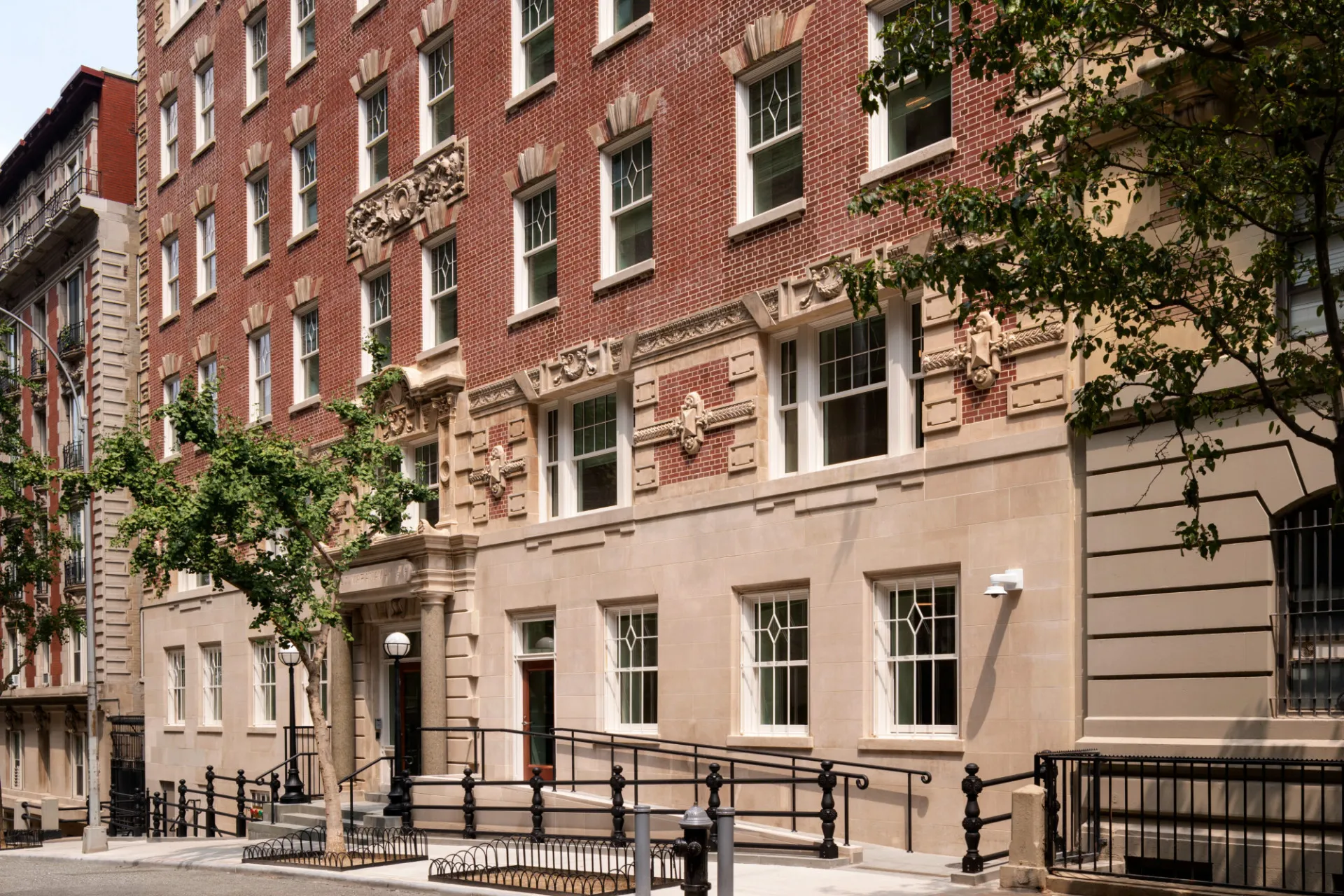
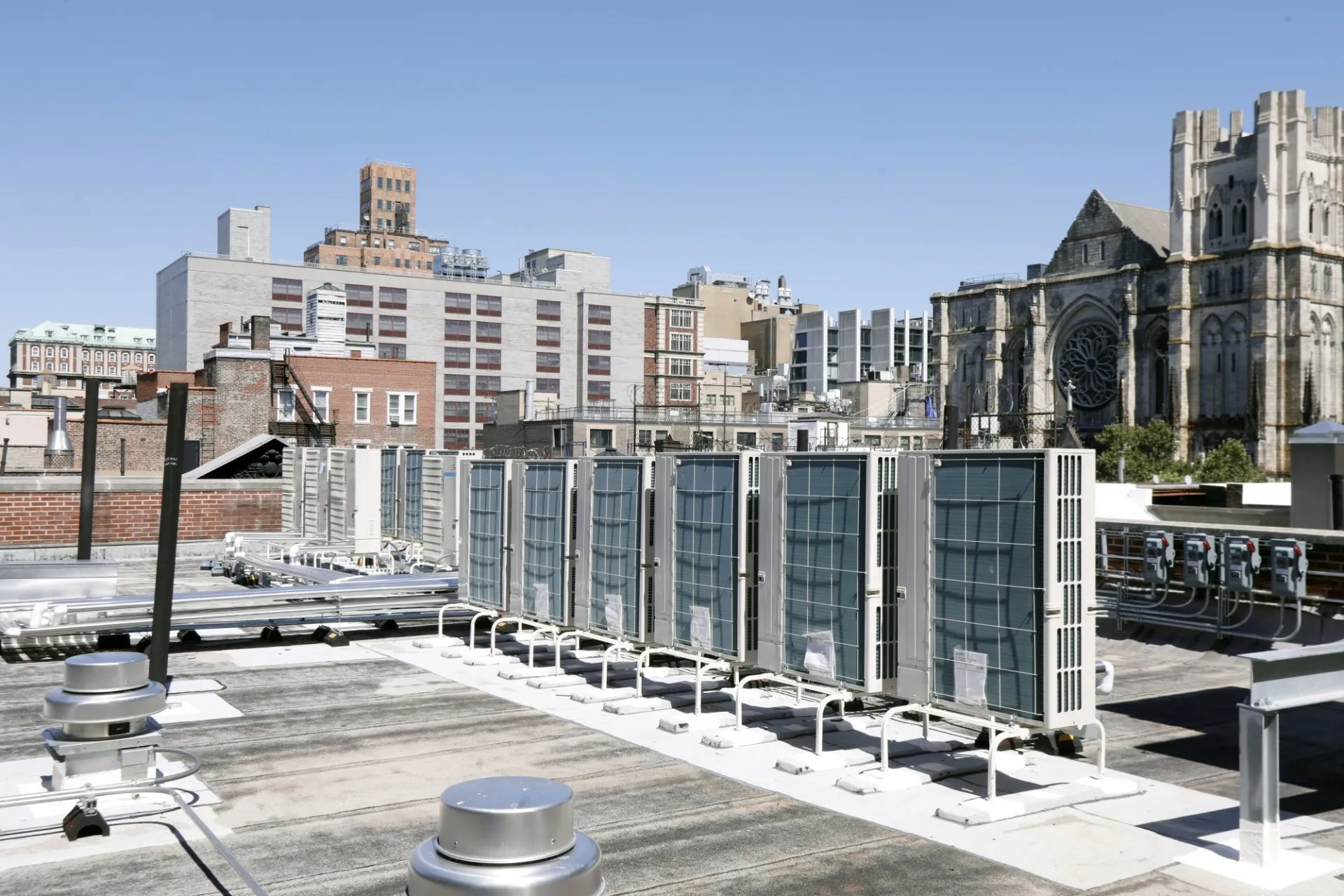
Columbia’s first all-electric undergraduate residence hall at 611 W. 112th Street is fossil fuel free, with an estimated 43 percent reduction in carbon emissions compared to a standard NYC residence hall. It was also built with a wide range of sustainable design features, including specialized heating and cooling systems, green roof trays, high-performance windows, variable refrigerant flow heat pumps, and more. The building is currently tracking LEED® Gold certification in recognition of its sustainable design, which would be Columbia’s first undergraduate residence hall to achieve LEED® certification.
Facilities and Operations also recently completed a multi-year, building-wide renovation project at 518 W. 111th Street, resulting in 32 fully renovated apartments and a fully electric building infrastructure.
600 W. 125th Street, a new 34-story apartment building for graduate students and faculty members that opened its doors last fall, is tracking LEED® Gold for its sustainable design and construction features. These include a high-performance façade, energy-efficient systems, limited gas usage for long-term carbon emissions reductions, vegetated roofs, stormwater detention, and more. The building has also earned Fitwel’s prestigious three-star rating (Fitwel’s highest standard) in recognition of its design, construction, and sustainability principles and its commitment to resident health and well-being.
Image Carousel with 3 slides
A carousel is a rotating set of images. Use the previous and next buttons to change the displayed slide
-
Slide 1: 611 W. 112th Street received a full exterior restoration all while keeping with historic district requirements. (Photo by James Ewing)
-
Slide 2: 518 W. 111th Street. Sustainable features of the building include new high efficiency HVAC systems. (Photo by Michael DiVito)
-
Slide 3: A rendering of a studio unit for graduate students at 600 W. 125th Street.

Ongoing Energy Conservation Measures
A number of energy conservation measures (ECMs) are being completed across Columbia’s campuses at any given time. ECMs can help reduce the University’s energy expenditure in the short term while longer-term projects, like building electrification renovations, are in the works.
Columbia University’s Engineering and Energy Management team maintains the mechanical, electrical, plumbing, and fire safety systems on Columbia’s campuses. Energy engineers within the department are continuously improving these vital systems using data and technology. They conduct regular audits and track energy use to optimize energy efficiency, as well as lead both future planning and ongoing projects with a sustainability lens.
Recently, the team completed comprehensive repair of the high-pressure steam system insulation in 39 buildings across Morningside campus for a total emissions reduction of 1,009 tons of carbon dioxide equivalent (tCO2e) per year.
The team is also conducting a years-long effort of campus-wide lighting upgrades. To date, they’ve upgraded the lighting in over 2.1 million square feet of buildings for a total emissions reduction of 939 tCO2e per year.
Plant-Forward, Local Food Procurement
Columbia Dining joined the NYC Mayor’s Office of Food Policy’s Plant-Powered Carbon Challenge (PPCC) in December 2023 at the recommendation of a student capstone group, who found that purchasing plant protein causes 38 times less emissions by weight than purchasing ruminant meat (that of herbivorous grazing animals like cows).
As part of the challenge, Dining committed to reducing its food-based carbon emissions 25 percent by 2030 through a plant-powered procurement strategy for its operations.
Now, nearly two years later, they've cut emissions from food procurement while managing an increase in Dining Plan enrollment. By adopting innovative strategies like reducing beef on menus, expanding plant-based options, and implementing an oat milk default, the University has taken significant strides in reducing food-related carbon emissions.
Local purchasing also plays a role, eliminating the need for long-distance hauling and reducing the transportation carbon footprint. Within Columbia Dining, approximately 58 percent of all food served is purchased from vendors within 250 miles of the Morningside campus.
Columbia Event Management’s menus are also designed to reduce food miles, bringing homegrown fresh produce and free-range poultry, beef, and lamb to catered events, as well as Marine Stewardship Council (MSC) certified seafood. Their Sustainable Living menu, developed alongside the Earth Institute, focuses specifically on vegan and vegetarian options.
Reducing Emissions by Going Electric
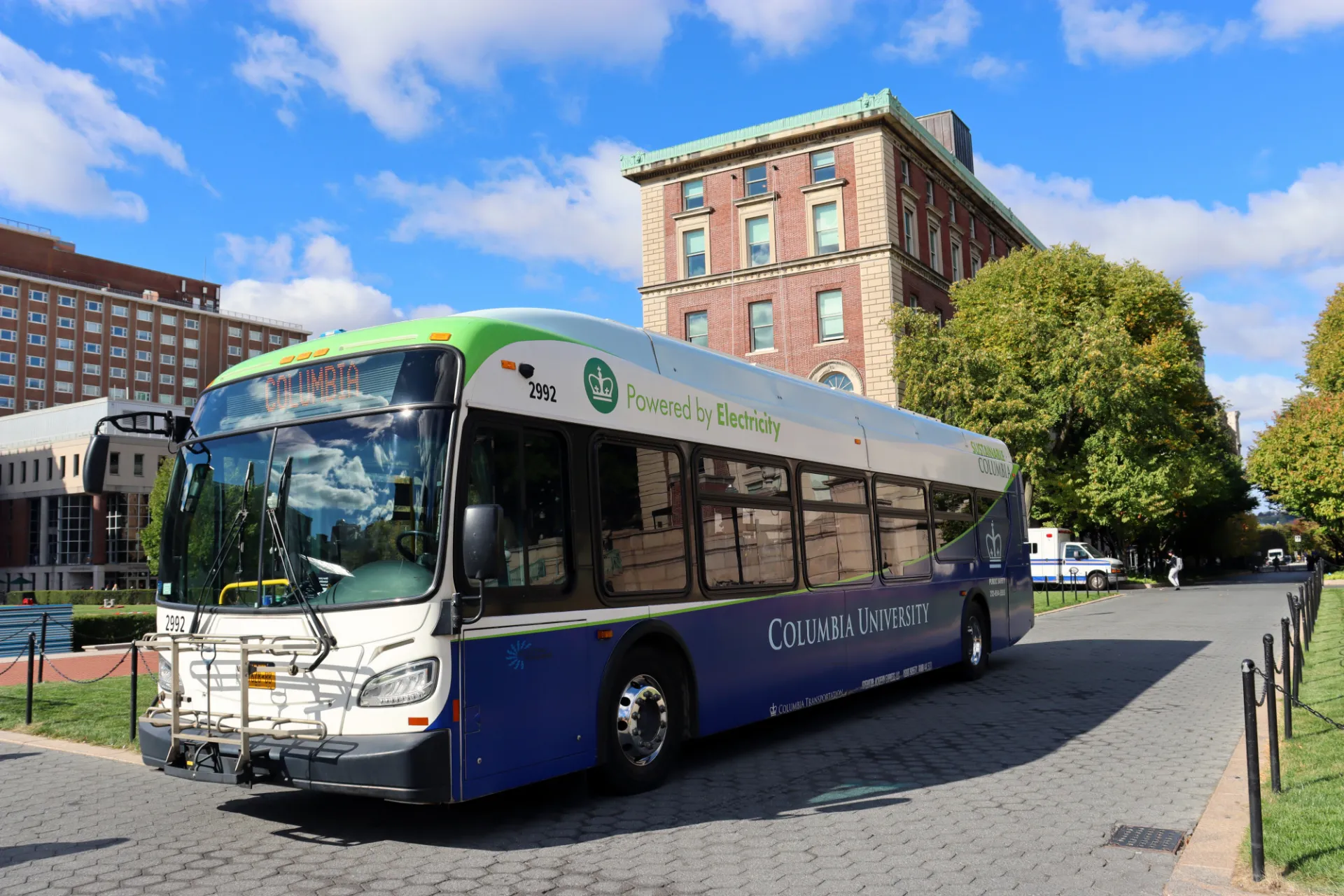
Columbia was one of the first institutions to invest in electric buses back in 2018, and our Columbia Transportation electric shuttles are some of the first to operate in New York City. In addition to electric buses, a range of electric vehicles (EVs) are used every day for University operations, from Columbia Mail delivery vehicles to Public Safety patrol cars.
In 2024, the decision was made to centralize the management of Facilities and Operations' 65+ vehicle fleet under Columbia Transportation's management. The goal is to standardize operational practices like fueling, safe driving, procurement, replacement, and maintenance.
It also allows the team to focus on greening the fleet and implementing a standardized charging infrastructure that will expedite achieving sustainability goals. A University-wide phased EV charging plan is underway, using data to project the expected demand as EV adoption grows.
Columbia also made the switch to electric lawn and garden equipment for its Grounds team. These electric lawn mowers, leaf blowers, string trimmers, light duty power washers, and chain saws can be used for the majority of grounds work, reducing the need for gasoline-powered equipment and reducing emissions.
Waste Management and Reuse
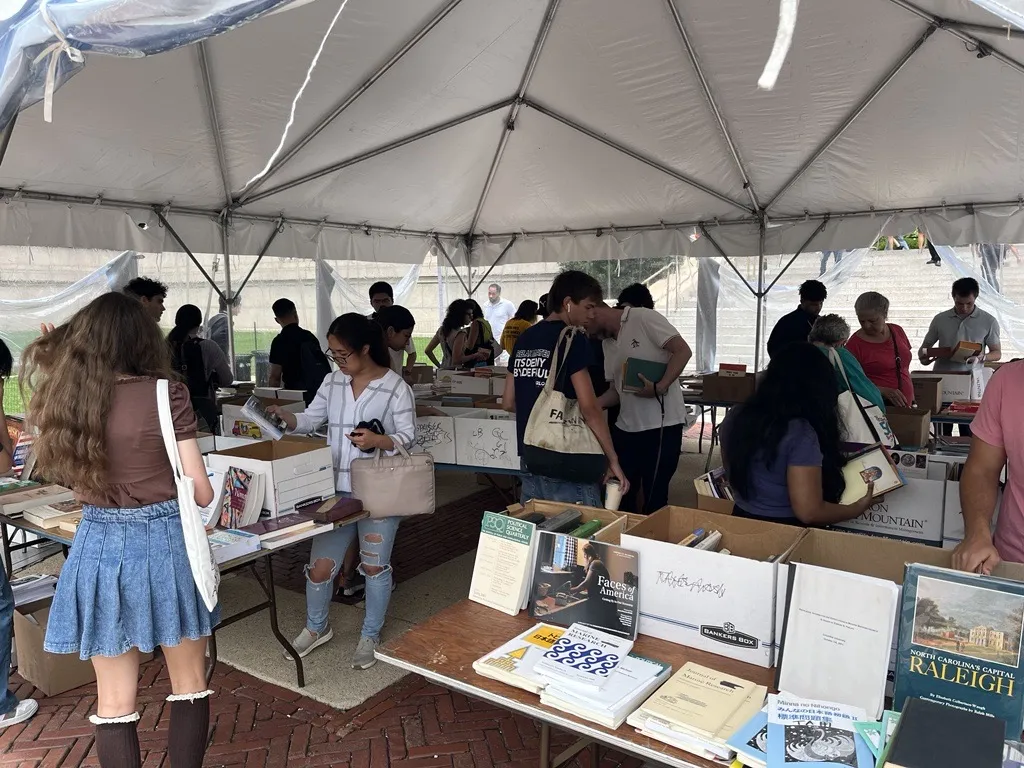
Facilities and Operations’ award-winning Clean + Go Green event – in collaboration with the Office of Sustainability and Columbia Community Service – takes place twice per year: once in November and once in July, spanning both the Morningside and Manhattanville campuses. Volunteers from across the University staff the tents, collecting donations and informing people about how to properly recycle or dispose of items.
Gently used clothing, unopened personal hygiene products, non-perishable food, shoes, and small household items are also collected for donation at the Morningside campus. This summer, an estimated 4,800 pounds of clothing was delivered to the Cathedral Church of St. John the Divine from bags collected at Clean + Go Green.
Faculty House is committed to reducing waste at events. Their filtered water stations take ordinary New York City tap water and pass it through a triple-filtration process that produces high-quality drinking water, without the use of plastic bottles. Linen-less tables were introduced at Faculty House in 2018, and the associated environmental impact of laundering and delivering linen lowered water usage by 18.6% in the first year.
Responsible Printing
Columbia Print’s operations are low-impact even by industry standards – using 100 percent recycled paper for stationery, business cards and all black-and-white print jobs. They also use 30 percent recycled paper for color print jobs, as well as Forest Stewardship Council (FSC) certified paper products. In addition to these initiatives, the Print team partnered with PrintReleaf to offset customers’ print projects by planting trees.
Through the partnership, every print project results in the equivalent planting of trees – restoring forests and reducing the amount of carbon dioxide in the atmosphere. Since signing on in December 2023, Columbia Print has helped plant over 4,000 trees at certified reforestation sites around the world.