Columbia Residential Creates Efficiencies Refreshing Apartments Between Tenants
This spring Columbia Residential streamlined its process for refreshing apartments between tenants. Through data automation, this new process is estimated to create an 83 percent time savings, recovering an estimated 2,500 staff hours annually – time that is being redeployed to more efficiently address work orders and other resident needs.
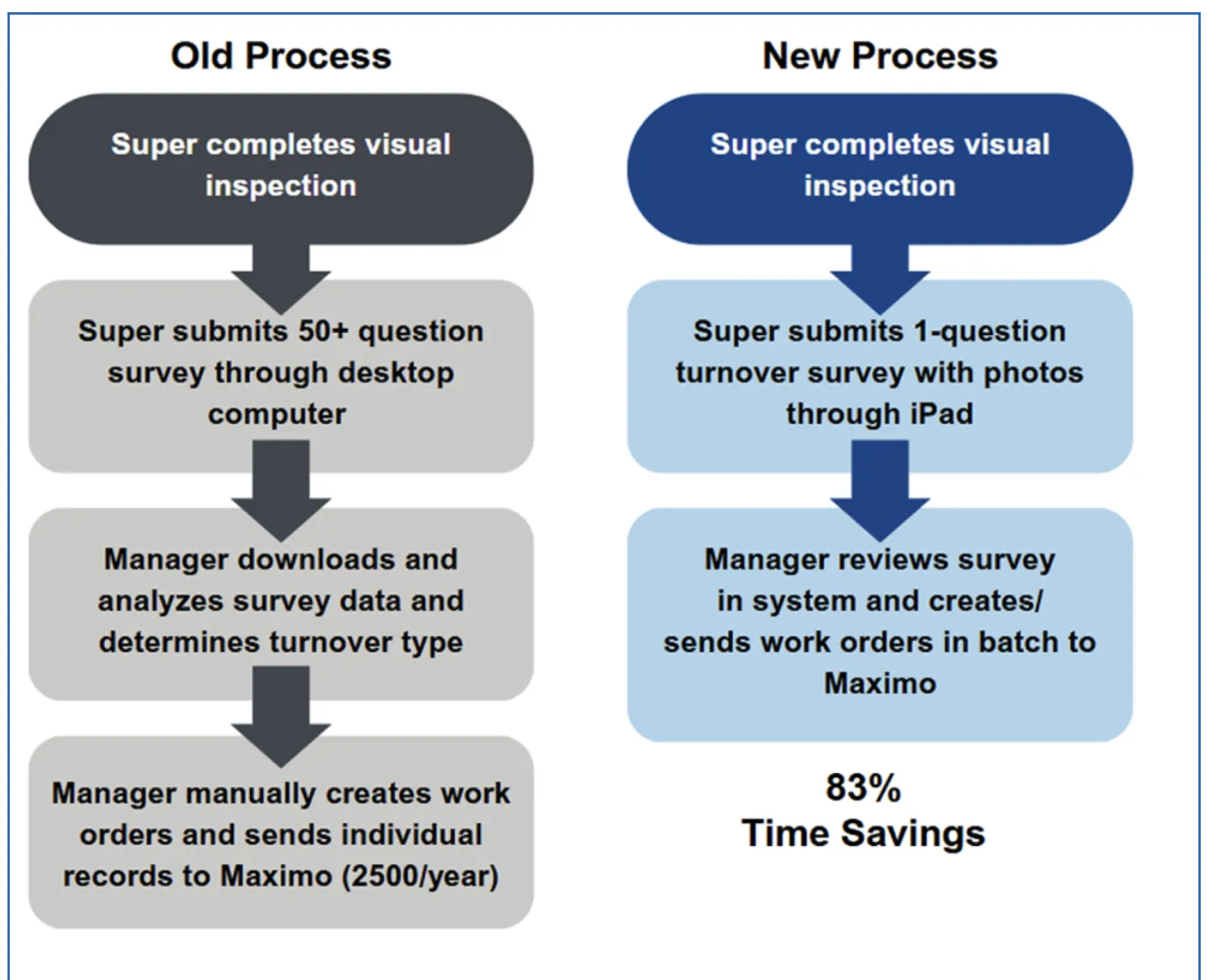
The effort to streamline apartment turnovers was a successful collaboration between two CUFO departments: IT and Columbia Residential. The CUFO IT team ordered, set up, and deployed 50 tablets to superintendents. They also created a reporting form for building superintendents to document needed repairs and convert them directly into work orders.
To ensure every tenant moves into a Columbia Residential building that looks and works like it should, superintendents walk through each vacated unit and note what needs to be repaired between tenants. Until recently, superintendents had to use paper forms to document needed apartment repairs during the turnover process and then enter them on a desktop computer. Residential property managers would then need to manually input supervisors’ inspection findings and order repairs.
By fully digitizing the apartment turnover process, Columbia Residential’s property managers can now quickly review needed repairs and related work orders in the online system, Maximo. Time previously spent on manual data entry and filling out forms by hand has been repurposed to support residents and plan for longer-term building repairs and upgrades.
These process improvements have also led to measurable financial savings. Residential renegotiated vendor contracts, bundling standard turnover services to reduce costs and maximize the return on investment. Since the new system launched in March 2025, the average cost per apartment turnover has decreased by 24 percent. In the current fiscal year (FY26), turnover costs are down by 43 percent compared to FY25.